
The Seminole Story: Survival, Blending, and the Power of Ancestry
The Seminole Story: Survival, Blending, and the Power of Ancestry
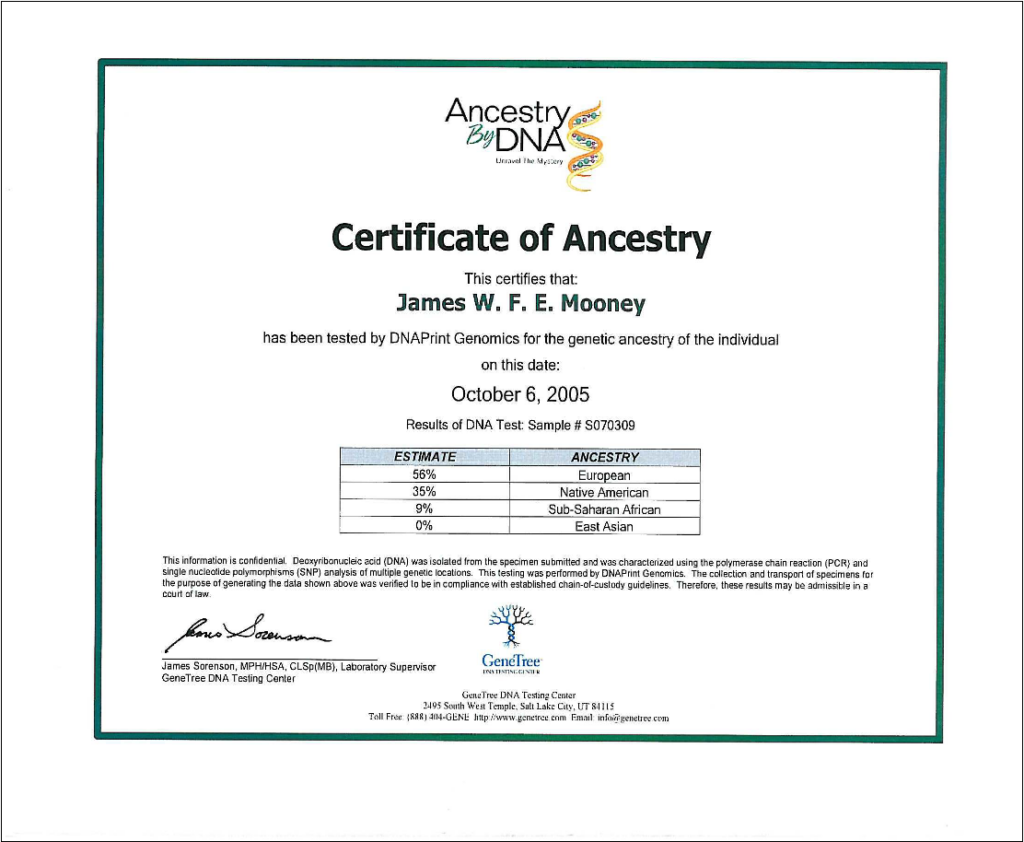
James Mooney’s DNA reveals a heritage that is 58% European, primarily Irish, 35% Native American, and 9% Sub-Saharan African. At first glance, those categories might seem separate. They appear as neat boxes in a modern testing report. History, especially in the American Southeast, has never been simple or divided into clean lines.
The story of the Seminole people is one of extraordinary blending, resilience, and cultural formation under pressure. Emerging in the 18th century from Creek groups and other Native peoples who moved into Florida, the Seminoles were not a single ancient tribe but a dynamic confederation. They absorbed refugees. They welcomed allies. They built something new.
Among those who became part of the Seminole story were:
Native Creek and other Southeastern Indigenous peoples
Africans who escaped slavery and formed deep alliances with Native communities, often called Black Seminoles
Europeans, including traders and settlers who intermarried and lived among these communities
Florida in the 1700s and 1800s was a crossroads. Spanish territory, British influence, American expansion, escaped enslaved Africans, and Indigenous resistance all converged there. Identity was shaped through relationship, survival, and shared struggle.
Within James’s own family history is the tradition that his great great grandfather was Osceola, the renowned Seminole leader who resisted United States removal efforts during the Seminole Wars. Historical records confirm that Osceola’s mother was Native Creek, and some accounts suggest his father was of European descent. While scholars differ on the exact origins of his father, family tradition holds that Irish ancestry was part of that lineage.
Whether viewed through documented history or inherited family memory, this connection reflects the layered ancestry that characterized Florida’s frontier communities.
The Black Seminoles played a vital role in this history. They farmed, fought alongside Seminole warriors, and stood in resistance during the Seminole Wars, one of the longest and most costly Indigenous resistance efforts in United States history.
European ancestry, including Irish, entered the region through trade, alliance, and intermarriage. Over generations, Indigenous, African, and European lives intertwined. The Seminole identity that emerged was rooted not in rigid categories but in shared commitment, survival, and sovereignty.
What makes the Seminole story powerful is not percentages on a DNA test. It is the spirit of endurance. Many Seminoles retreated into the Everglades rather than submit to forced removal. Their culture adapted but remained sovereign.
James’s ancestry reflects that same American tapestry. Indigenous roots, African resilience, and Irish heritage woven together across generations.
DNA can suggest where ancestors may have originated. History shows how they lived, resisted, and formed community.
The Seminole story reminds us that identity is shaped by shared history, lived experience, and enduring legacy. It is a story of people who refused to disappear. That legacy is something worth honoring.