
Father Powell: Friend to All
Bridging Worlds: Father Powell and the Legacy of James Mooney
Two remarkable men — separated by decades, united by devotion — helped ensure that Native American sacred traditions would be understood, honored, and preserved for generations to come.
The story of how Indigenous spiritual life came to be documented and defended in America passes through many hands. Among the most significant are those of ethnologist James Mooney and Anglican priest Father Peter J. Powell, men whose work, though separated by nearly a century, forms a continuous thread of respect, scholarship, and advocacy for Native peoples.
James Mooney and the Peyote Question
James Mooney arrived at the Bureau of American Ethnology in the 1880s and spent decades living among and learning from Native communities across the country. His fieldwork with the Cherokee, Kiowa, and other nations produced some of the most enduring ethnographic records of his era. But it was his courageous defense of peyote ceremonialism that secured his place in the history of religious freedom.

In the early twentieth century, federal officials and religious reformers sought to criminalize peyote use among Native people, viewing the sacrament through a lens of ignorance and cultural hostility. Mooney stood against that tide. Having witnessed the peyote ceremony firsthand and documented its profound spiritual significance, he testified before Congress in 1918 on behalf of Native practitioners, arguing that the ritual deserved the same legal protection afforded to any religious observance. He was instrumental in helping Native leaders incorporate what would become the Native American Church that same year, providing an organizational framework that offered some measure of legal shelter.
Mooney paid a personal price for his advocacy. The Bureau of American Ethnology was pressured to curtail his fieldwork, and he was effectively barred from returning to the communities he had served. He died in 1921, his final years shadowed by institutional retaliation. Yet his documentation of the peyote ceremony and his defense of its practitioners left a foundation that others would build upon.
Father Powell: Carrying the Work Forward
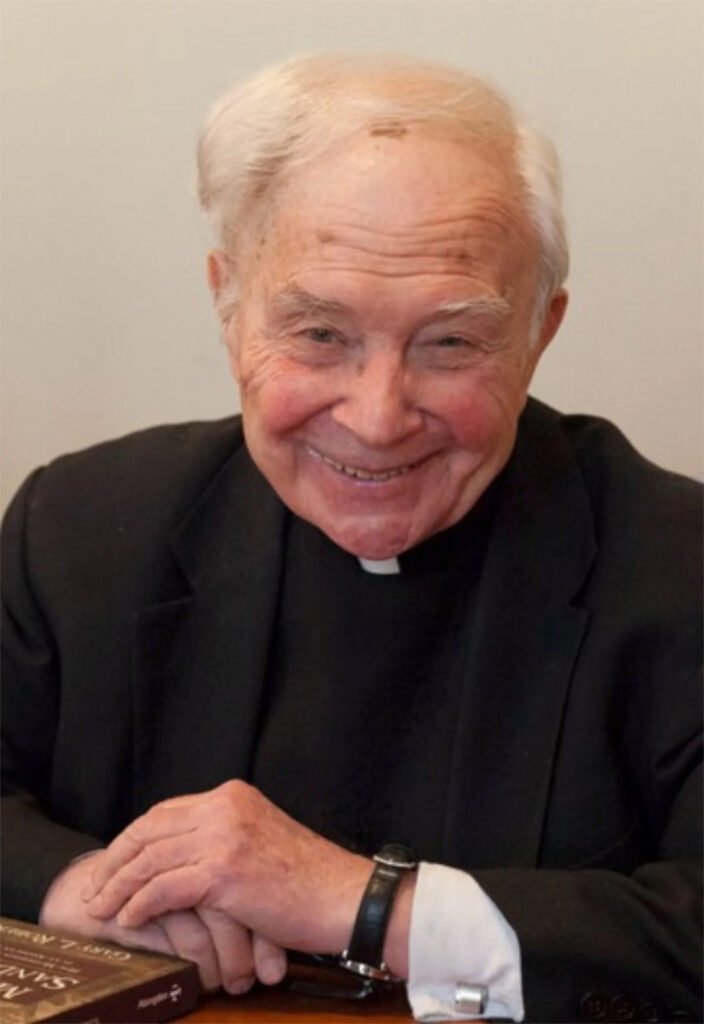 Father Peter J. Powell came to Native ministry through a different door, the Anglican priesthood, but arrived at a similar place of deep commitment. Ordained and serving in Chicago, he founded St. Augustine's Center for American Indians in 1961, which became a vital hub for the large urban Native community that had been displaced by federal relocation policies. For decades, St. Augustine's offered spiritual care, cultural connection, and practical support to thousands of Native people far from their homelands.
Powell's scholarly work ran parallel to his ministry. His two-volume masterwork, Sweet Medicine (1969), remains the definitive study of the Sacred Arrows and the spiritual life of the Northern Cheyenne, a work produced with the blessing and collaboration of Cheyenne elders who trusted him as a genuine ally. He followed it with People of the Sacred Mountain (1981), further cementing his reputation as one of the most authoritative non-Native voices on Cheyenne history and religion.
In his writings and public advocacy, Father Powell frequently drew on Mooney's earlier ethnographic record, citing it as foundational evidence of the antiquity and integrity of Native ceremonial life. For Powell, Mooney's documentation was not merely academic history. It was a legal and moral argument: proof that these practices predated any federal prohibition, and that their suppression represented a profound injustice.
A Shared Conviction
What connects Mooney and Powell across time is not simply subject matter but disposition. Both men approached Native sacred traditions not as curiosities to be catalogued but as living spiritual realities deserving of reverence and protection. Both used the tools available to them, scientific testimony, published scholarship, institutional access, in service of communities that had been systematically denied a voice in the halls of power.
For Oklevueha Native American Church, this lineage matters. The legal and cultural ground on which we stand was partly cleared by those who came before, scholars, priests, and advocates who insisted that Indigenous spiritual life had a rightful place in American religious freedom. James Mooney and Father Peter J. Powell are part of that story, and we honor their contributions with gratitude.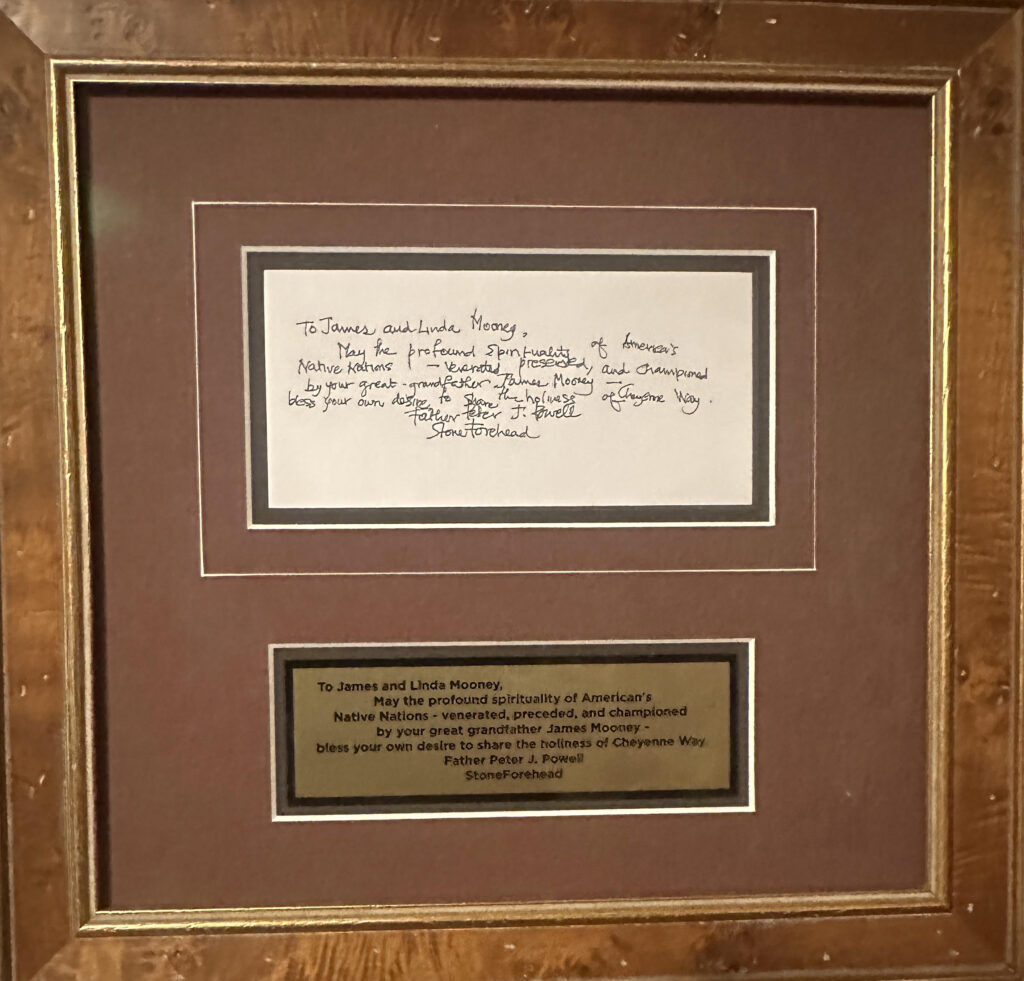
Prior to his passing, Father Powell reached out to James and Linda, and sent them a note, which James had framed. Father Powell had hoped to be able to meet James, but his health prevented it.
May the profound spirituality of America’s Native Nations – venerated, preceded, and championed by your great grandfather James Mooney – bless your own desire to share the holiness of Cheyenne Way.
Father Peter J. Powell
StoneForehead