Sacred Authority in Action
Sacred Authority in Action: James Mooney, Oklevueha Native American Church, and the Transformation of Utah Law
There is a difference between being tolerated and being recognized. For most of American history, Indigenous spiritual practice was neither -- it was actively suppressed, criminalized, and erased. What James Warren "Flaming Eagle" Mooney and Oklevueha Native American Church helped accomplish in the State of Utah represents something rare and hard-won: the transformation of tolerance into genuine legal equality.
That transformation did not happen in a single courtroom or through a single piece of legislation. It happened through decades of relationship-building, ceremony, advocacy, and persistent, principled presence. The result is a body of Utah law that now places Indigenous spiritual leadership on equal footing with every other recognized religious tradition in the state -- including the Church of Jesus Christ of Latter-day Saints, which has shaped Utah's civic and legal culture since the territory's founding.
That is not a small thing. It is a remarkable one.
The Utah Indoor Clean Air Act: Ceremony as Sacred Practice, Not Exception
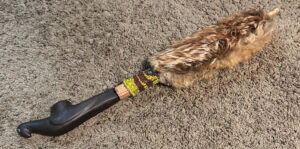
The Utah Indoor Clean Air Act (UCA 26B-7-503 and UAC R392-510) governs smoking and burning in indoor spaces across the state. What makes Utah's version notable is what it explicitly protects: the right of a pipe carrier, Indian spiritual person, or medicine person recognized by their tribe to conduct traditional pipe ceremonies indoors, exempt from the general smoking prohibition.
This exemption did not write itself. It required the state of Utah to formally acknowledge that the Sacred Pipe ceremony is not recreational smoking. It is worship. It is prayer made visible, offered in the oldest tradition of the Americas. The accompanying ceremonial burning exemptions -- protecting practices such as sweat lodge ceremony even during restricted burning days -- extend that same acknowledgment further.
What James Mooney and Oklevueha Native American Church helped establish, through years of education, legal engagement, and genuine relationship-building with state officials, is that Utah law must make room for the sacred as Indigenous people define it -- as the tradition itself defines it, carried by those authorized to carry it.
Marriage: The Law Recognizes Who Carries the Authority
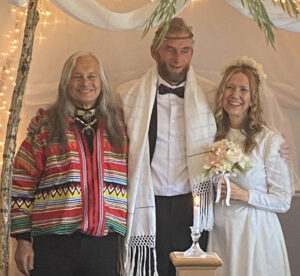
Utah's marriage statutes now explicitly list Native American Spiritual Advisors among the authorized officiants for legal marriage solemnization -- alongside ministers, priests, rabbis, imams, bishops, judges, and the governor. That list represents a legal statement about whose spiritual authority the State of Utah considers valid.
For that recognition to exist in statute, someone had to make the argument -- had to stand before the legal and political structures of a state dominated by a single faith tradition and demonstrate that Indigenous spiritual leaders carry a lawful and legitimate authority to bless and witness the most fundamental of human covenants.
James Mooney has not simply advocated for that authority in the abstract. He has exercised it. He has personally officiated at marriages, blessed graves, and conducted funeral services, accompanying families through life's most significant moments with the full weight of Indigenous spiritual tradition.
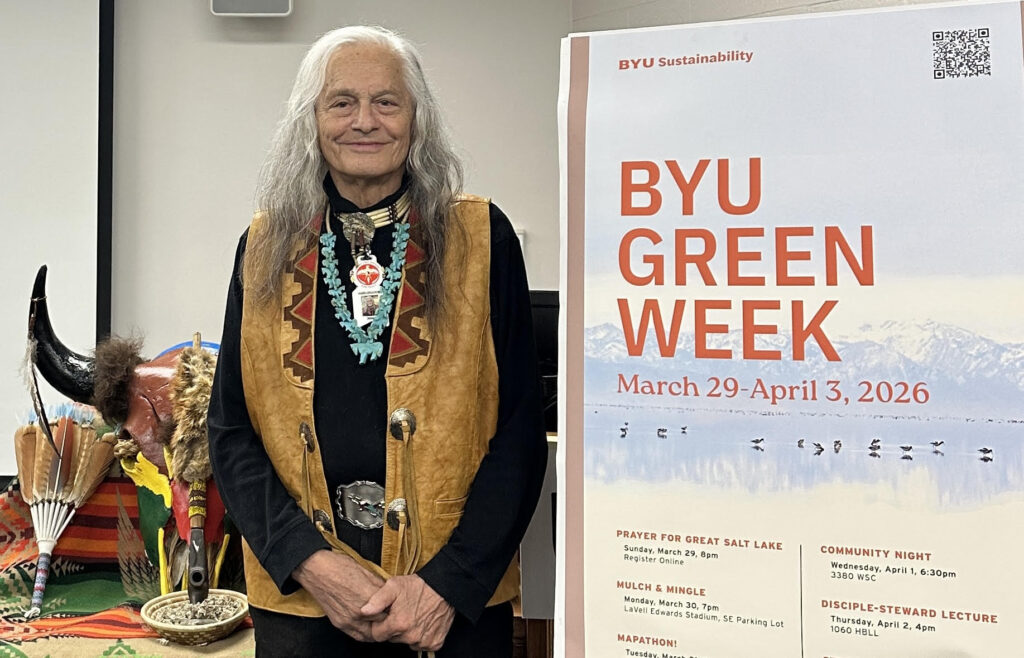
James Mooney at BYU's Green Week
When organizations and individuals doing meaningful work in the world have asked him to perform a Sacred Prayer Pipe blessing ceremony on their behalf, James has described the honor as indescribable -- to be invited into the sacred moments of people's lives and to carry those moments with the fullness of his tradition is a calling beyond measure. The legal recognition ensures that the ceremonies are honored and that no one can diminish what has taken place.
Equal Standing: The Deeper Achievement
The legal changes in Utah are the visible evidence of a deeper shift that James Mooney, alongside Gary Tom, Wil Numkena, and Governor Michael Leavitt, helped bring about in the legal and judicial perception of Indigenous spirituality across the state.
Through the Utah State Supreme Court ruling confirming Oklevueha Native American Church as a bona fide Native American Church, through the Department of Human Services clergy exemption, through the marriage statutes, and through the clean air exemptions, they established that the Indigenous spiritual traditions of North, Central, and South America hold the same legal rights and civic recognition as any other religious tradition in the United States -- the same rights and understanding as the Church of Jesus Christ of Latter-day Saints. Not less. Not contingent on federal tribal enrollment. Not subject to a lesser standard. The same.
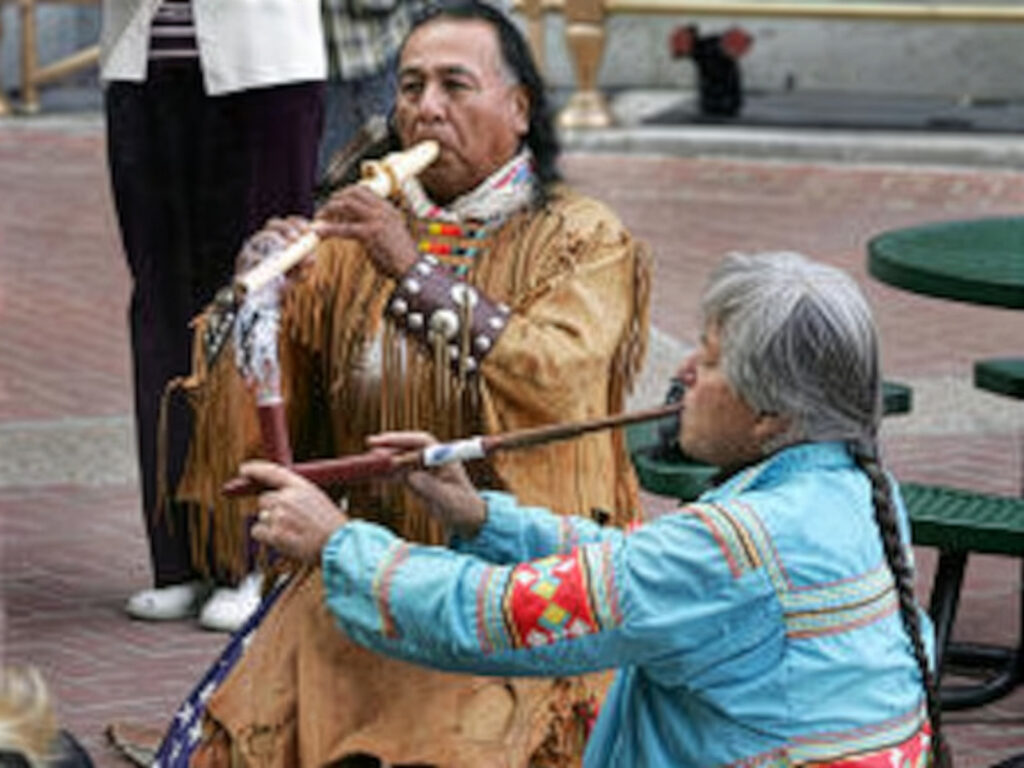
That principle was not granted. It was built -- argued, demonstrated, and defended over decades by people who refused to accept that ancient, living spiritual traditions needed to justify their existence to the governments that once tried to destroy them.
James Mooney has spent his life walking the line between spiritual calling and civic engagement. The laws of Utah bear the mark of that walk. So do the marriages he has blessed, the graves he has honored, and the organizations whose sacred work he has lifted up in prayer.
The honor, as he says, is indescribable. So is the achievement.