A Pattern of Suppression, A Promise of Protection
A Pattern of Suppression, A Promise of Protection:
Oklevueha Native American Church and the Long Fight for Indigenous Religious Freedom
The Founding of Oklevueha Native American Church
Oklevueha Native American Church (ONAC) was founded by Seminole James Warren "Flaming Eagle" Mooney and Lakota Sioux Richard "Holds the Foundation" Swallow, both dedicated Medicine Men by their respective tribes. The Church carries forward two distinct but kindred earth based spiritual traditions, joining the staunch ceremonial ways of the Lakota Sioux with the fluid, melded traditions of the Seminole people.
The story of how ONAC came into being cannot be told honestly without telling the story of what was done to keep its traditions from ever existing in the open. What follows is a record of four moments, three historical and one modern, in which the United States government, its agents, or those acting under its influence attempted to silence the spiritual leaders who carried these ways. It is also a record of the legal protections that, at long last, recognize the Native American Church's right to worship.
The Pattern of Extermination
Osceola, Seminole Leader (died January 30, 1838)
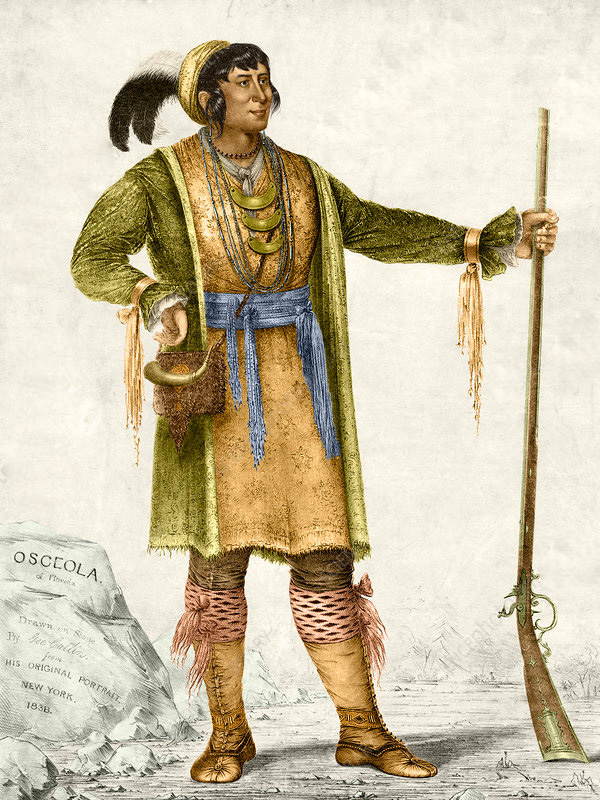 Seminole leader Osceola died on January 30, 1838, at age 33 while imprisoned by the U.S. Army at Fort Moultrie on Sullivan's Island, South Carolina. He had been taken into custody under controversial circumstances, having approached under a flag of truce. Official Army reports attributed his death to disease, citing malaria or quinsy. Oral history among the Seminole people tells a different account, in which Osceola was shot by an officer. What is not in dispute is what followed his death: an Army doctor decapitated his body. The suspicion surrounding both his death and that desecration has never been resolved.
Crazy Horse, Oglala Lakota Leader (died September 5, 1877)
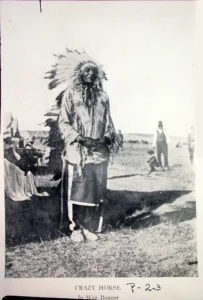 Little Big Man, also known as Charging Bear, was an Oglala Lakota warrior who had become a U.S. Army ally and a rival of Crazy Horse. He is famously remembered as one of the men involved in the events of September 5, 1877, when Crazy Horse, one of the most revered spiritual and military leaders of the Lakota people, was killed at Fort Robinson. The pattern in which a respected Indigenous spiritual leader is taken into custody and dies in the company of soldiers and former allies repeats itself with painful exactness across these decades.
Sitting Bull, Hunkpapa Lakota Holy Man (died December 15, 1890)
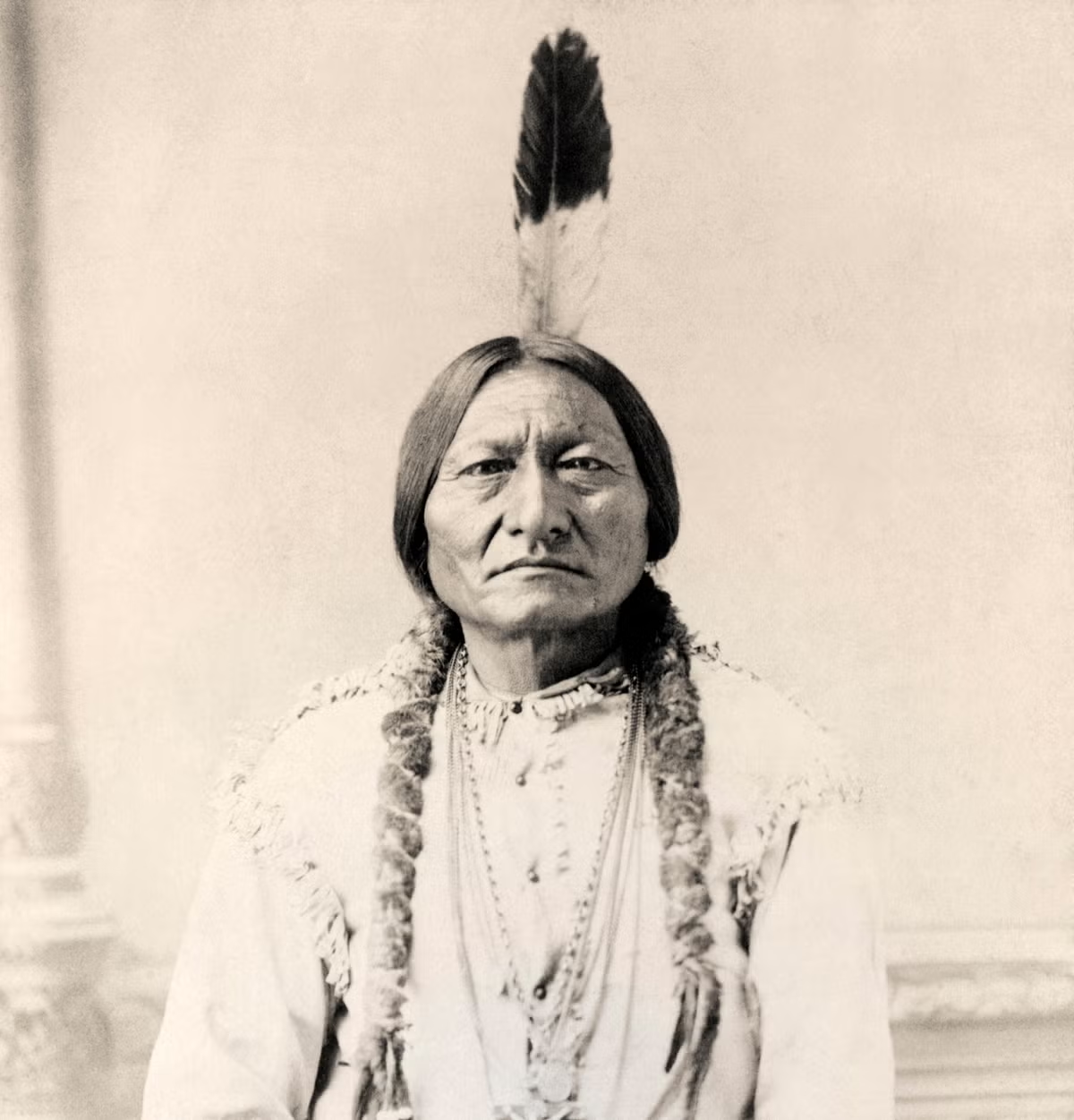 Sitting Bull was killed on December 15, 1890, by Lakota Sioux Indian agency police operating under the control of United States Indian Agent Major James McLaughlin. His death came at a time when federal authorities considered his spiritual influence dangerous, particularly in connection with the Ghost Dance movement. Like Osceola and Crazy Horse before him, Sitting Bull was killed not for any military action but for the spiritual authority he carried among his people.
The Mooney Family Threats
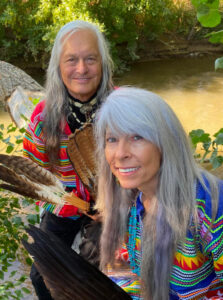 The same pattern reached into the present generation of Native American Church leadership. The Utah County Sheriff's Office produced a report investigating threats to kill James Mooney and his entire family. The threats were made by Lance Morris, a Lakota Sioux man, a paroled inmate from Gunnison State Prison whom James was assisting in re-establishing himself in society. The investigation that followed became something far larger than a local threat case.
What the Investigation Uncovered
After five and a half months of investigation by the Utah Federal Defenders Office, a much older record came into view. The investigation found that the United States government had been complicit in denying the Indigenous cultures of North, Central, and South America, encompassed today in the Native American Church, of their civil liberties since October 10, 1918.
The conspiracy to prosecute James Warren "Flaming Eagle" Mooney involved entities outside the United States and its state governments who used their influence with federal and state agencies to cover up illegal and immoral activities. Those activities, traced across more than a century, were aimed at murdering or otherwise suppressing the Indigenous cultures of the Americas and stripping them of their civil liberties. The full account of how this came to light is preserved in the U.S. Federal Government's Settlement Agreement.
The deaths of Osceola, Crazy Horse, and Sitting Bull, and the modern threats against the Mooney family, are not isolated incidents separated by time. They are points along the same line.
The Legal Protections That Now Stand
Out of this long history, two bodies of federal law have come to recognize the unique standing of the Native American Church.
The Religious Land Use and Institutionalized Persons Act
The Religious Land Use and Institutionalized Persons Act, known as RLUIPA, applies to the Native American Church in three ways that no other religious body in the United States can claim.
First, on religious land use, the Native American Church is the only Church worshipping in the United States that recognizes the Earth as its Temple and that fundamentally worships the Earth itself.
Second, on institutionalized persons, the Native American Church is the only religion to have successfully sued the United States government to allow the sweat lodge ceremony to be conducted in the federal prison system.
Third, the statute provides protection where, in its own language, "the substantial burden affects, or removal of that substantial burden would affect, commerce with foreign nations, among the several States, or with Indian tribes, even if the burden results from a rule of general applicability." The Native American Church is the only religion or Church whose spiritual practices, by their very nature, require commerce with foreign nations, among the several states, or with Indian tribes in order to be carried out.
21 CFR § 1307.31 and the Use of Indigenous Sacraments
At present, the Native American Church is the only Church clearly understood to qualify under federal law to use Indigenous Sacraments. Two points are essential to understanding this regulation.
First, while 21 CFR § 1307.31 specifically names the Native American Church, other organizations have sought exemptions for different substances. The União do Vegetal and Santo Daime churches, for example, were granted DEA exemptions for ayahuasca following court orders based on the Religious Freedom Restoration Act.
Second, 21 CFR § 1307.31 is a specific federal regulation that exempts the Native American Church from the Controlled Substances Act regarding the use of peyote in bona fide religious ceremonies. While this regulation has historically made the Native American Church the only organization explicitly named for a peyote exemption, the broader legal landscape regarding religious exemptions remains complex and continues to develop.
A Tradition That Endured What It Was Meant to Survive
From Osceola at Fort Moultrie in 1838, to Crazy Horse at Fort Robinson in 1877, to Sitting Bull on the Standing Rock reservation in 1890, to the threats made against the Mooney family in our own time, the effort to silence the spiritual leaders of the Indigenous peoples of the Americas has been long, well documented, and at times sanctioned by the highest levels of government.
That the Oklevueha Native American Church exists today, that the sweat lodge is conducted in federal prisons, that the Earth is recognized in federal law as a Temple, and that Indigenous Sacraments are protected for bona fide religious use, is not the natural outcome of that history. It is the result of generations of Medicine Men and Medicine Women who refused to let these traditions die, and of the legal victories that finally caught up to what those carriers of the medicine had always known to be true.