

The Native American Church Temple:
Mother Earth / Father Sky
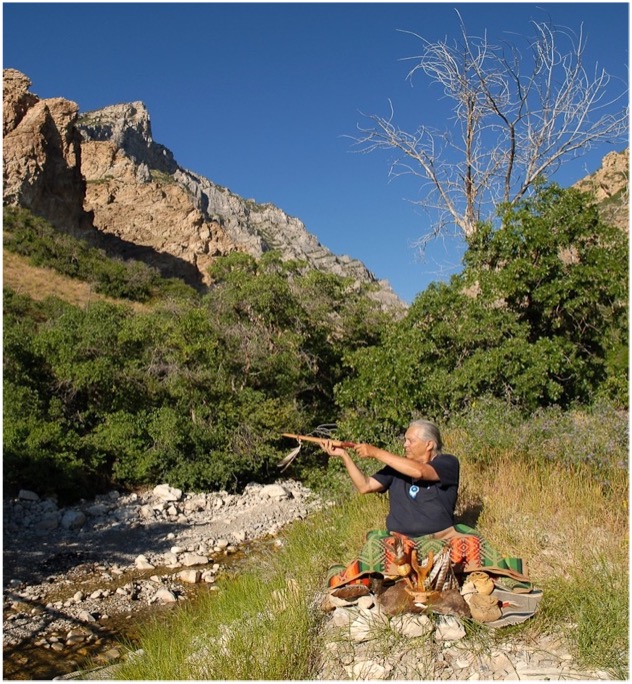
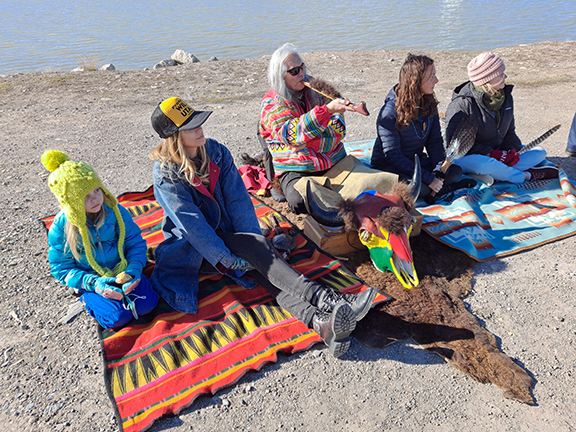
Honoring and Protecting our Mother Earth
The Native American Church honors Mother Earth and Father Sky as the two sacred forces from which all life springs. Indigenous peoples across this hemisphere have long understood the earth and sky not as separate realms, but as partners in one continuous act of creation: the earth receives, nourishes, and gives form to life, while the sky provides light, rain, and breath, the very elements that sustain it.
This union is reflected in ceremony, in the orientation of sacred sites, and in the stories passed down through generations, each honoring the balance between what rises from the ground and what descends from above.
To honor Mother Earth and Father Sky together is to recognize that neither can be understood alone, and that all indigenous spiritual traditions, in their own unique ways, have carried forward this same reverence for the Great Spirit present in both..
Honoring Mother Earth and Father Sky
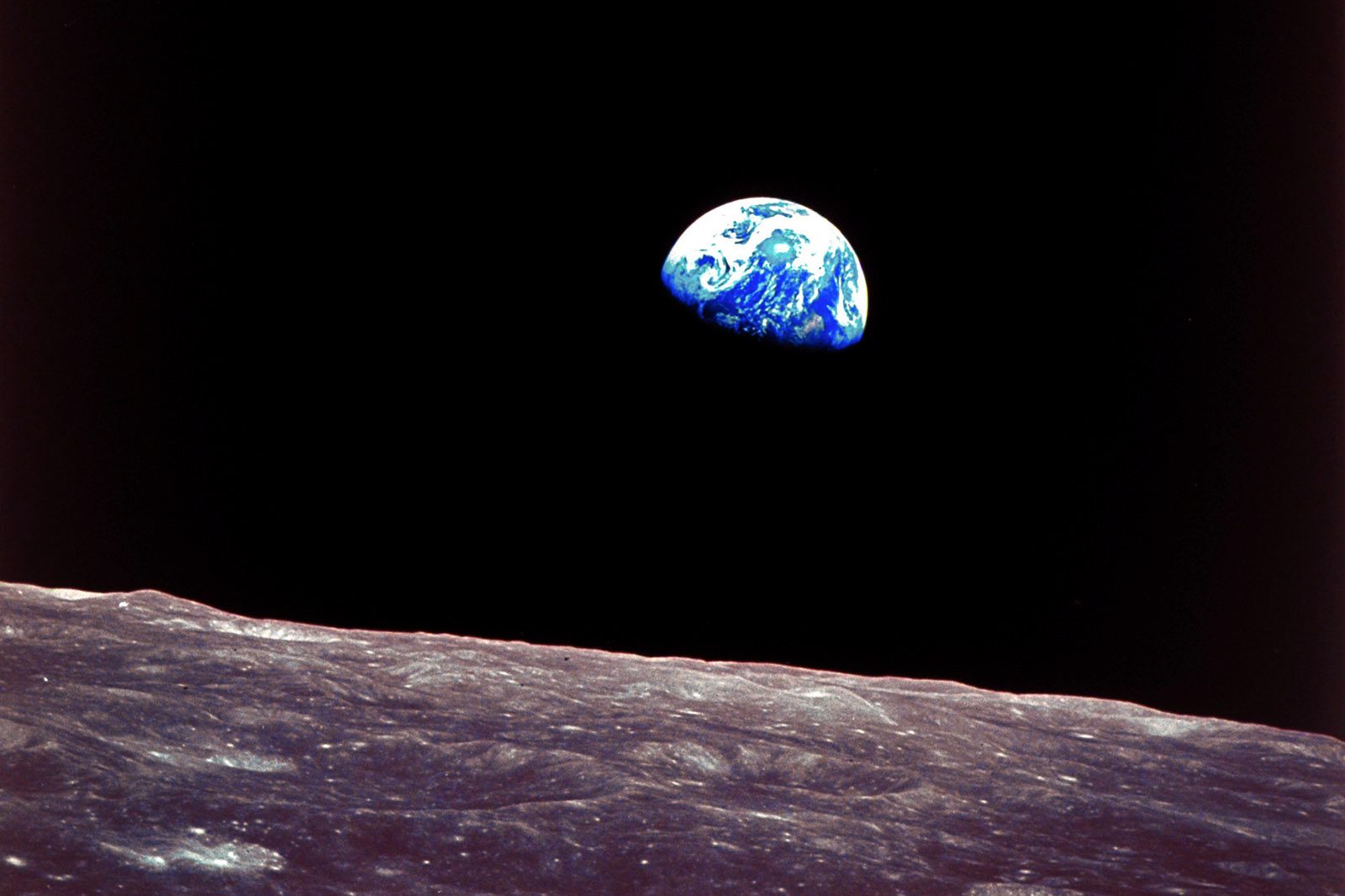
The Earth: Our Temple
Every religion has a sacred place. For the Native American Church, that place was not built -- it was given.
The Earth is our temple. She does not require construction or consecration. She is already holy, already alive, already in relationship with every living thing she sustains. To sit in ceremony beneath an open sky, beside a fire, near running water, is not to approximate worship. It is worship, in its most original form.
Protecting Mother Earth and Father Sky
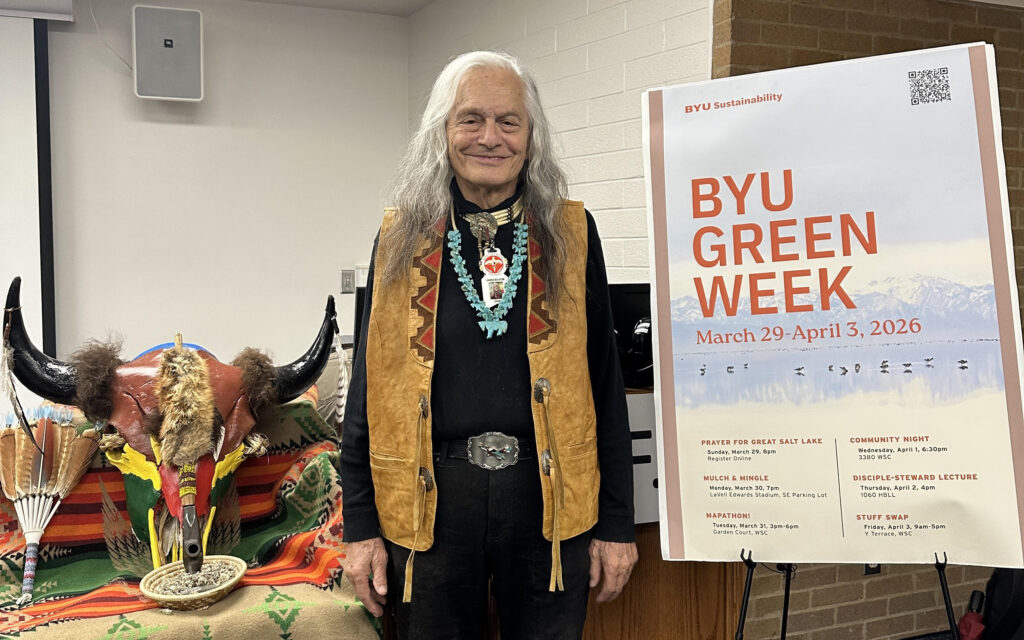
BYU Green Week 2026
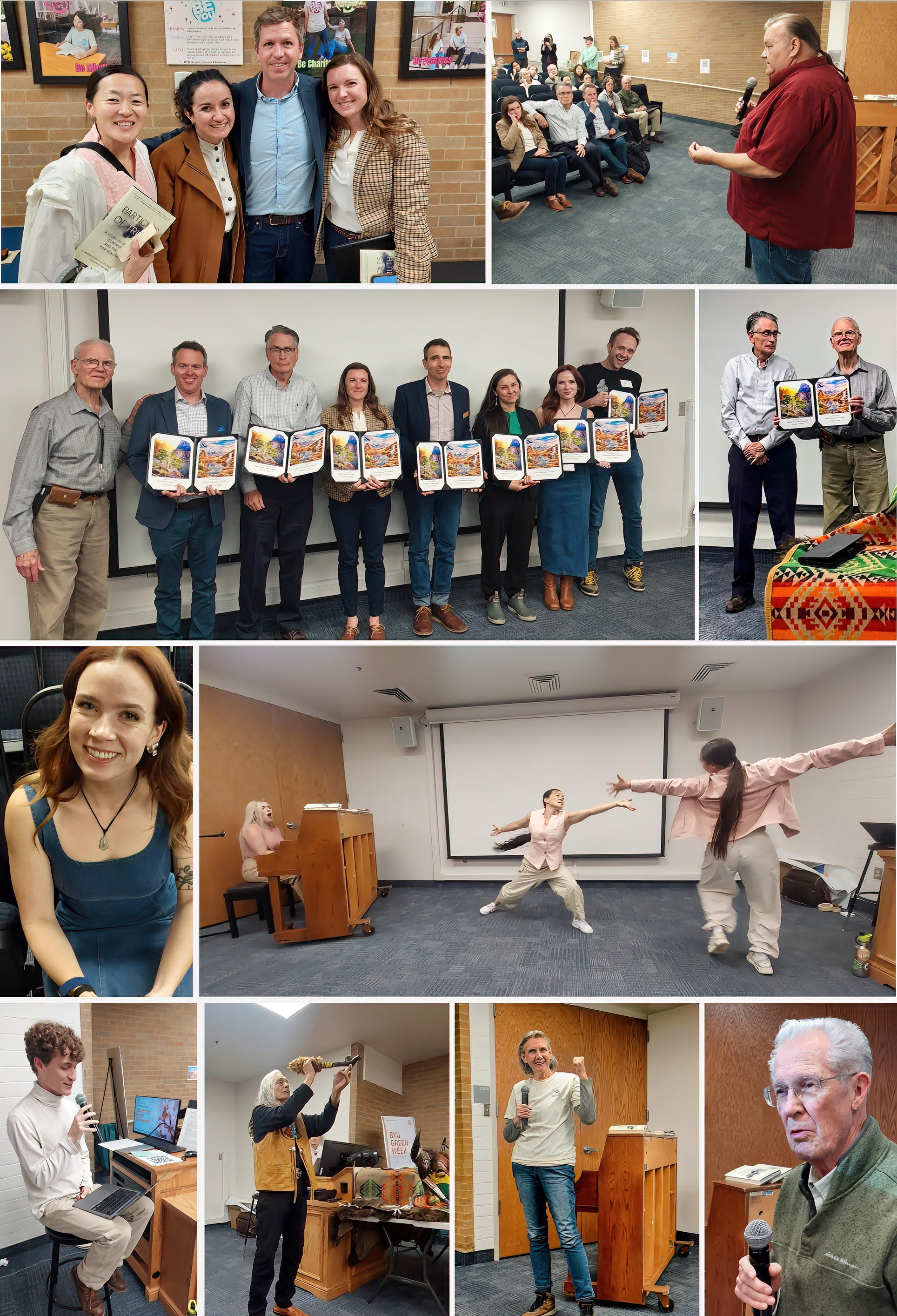
BYU Green Week Winter 2026, hosted by the BYU Sustainability Office from March 29 through April 3, was organized to celebrate campus sustainability and invite students, faculty, and the broader community into hands-on environmental stewardship rooted in faith. Rather than publishing a formal mission statement for the week, the Sustainability Office expressed its purpose through the lineup of events itself, which wove together service, learning, worship, and community-building.
The week opened with a prayer and optional fast for the Great Salt Lake, framing stewardship as a spiritual practice and drawing attention to the lake's critical decline. James Warren "Flaming Eagle" Mooney blessed the proceedings from the beginning with a pipe ceremony, setting a sacred tone for the week ahead. From there, the focus shifted to tangible service and skill-building: a "Mulch and Mingle" trail beautification project near LaVell Edwards Stadium, and a Mapathon in the Wilkinson Student Center where participants learned mapping skills to support vulnerable communities. A Community Night showcased campus and local partners working on sustainability, with awards and entertainment meant to make involvement feel accessible and celebratory. As each recipient came forward to be awarded a plaque, James offered a blessing with the Eagle Fan, honoring their contributions to the work of stewardship.
The vision side of the week came through most clearly in the Disciple-Steward Lecture, an annual talk connecting sustainability and faith, delivered in 2026 by BYU biology professor and science communications expert Dr. Jamie Jensen. The framing of "disciple-steward" reflects BYU's broader approach to sustainability as discipleship, treating care for the earth as part of religious responsibility rather than a separate civic concern. The week closed with a student-run Stuff Swap, turning everyday consumption habits into a practical exercise in reuse. James brought the event to a close with his closing statements, sealing the week's work in the same spirit in which it began.
Taken together, the purpose of Green Week 2026 was to celebrate sustainability progress on campus while giving people concrete ways to participate, and the vision was to frame environmental stewardship as a faith-rooted, community-oriented daily practice, in line with the Sustainability Office's broader mission.
The Power of Prayer
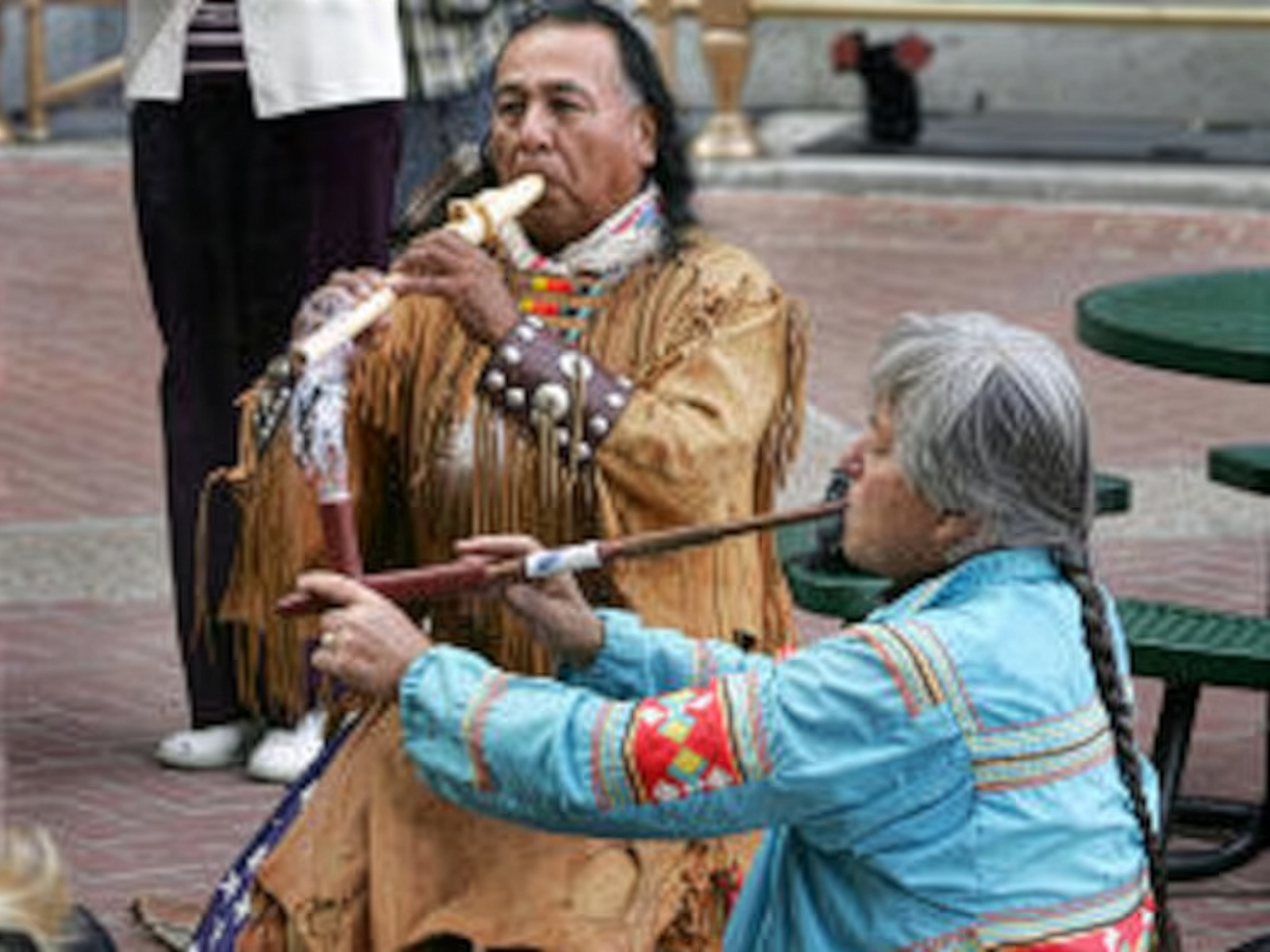
James Warren "Flaming Eagle" Mooney has devoted himself to protecting the sacred temple of earth and sky through the power of prayer. Across many years, he has traveled to sacred sites and prayed over them, asking the Great Spirit to bless and protect these places for future generations. He holds that prayer is not merely words spoken, but a living act of guardianship, one that binds him to the land itself and to the responsibility of safeguarding what is sacred. Through this ongoing commitment, James continues to honor Mother Earth and Father Sky, standing as a steward of the sites entrusted to his care.