
The Earth is Our Temple
The Earth as Sacred Temple:
Indigenous Wisdom and the Living World
In the great cathedrals of Europe, worshippers gather beneath vaulted ceilings painted with images of heaven and enter a space set apart from ordinary life. The building itself signals the sacred. Bells ring, incense rises, and the architecture points upward toward the divine. This is one way human beings have understood the relationship between place and spirit.
But long before the first stone was laid for any human-built house of worship, indigenous peoples around the world had already identified their temple. It stretched from horizon to horizon. It breathed with seasons. It held the bones of their ancestors and fed the bodies of their children. It was the earth itself.
For the vast majority of human history, the natural world was not a backdrop to spiritual life. It was the substance of it.
Not a Resource, But a Relative
The foundational difference between the indigenous understanding of the earth and the dominant modern understanding is not primarily philosophical. It is relational. Where the industrial world tends to see the natural world as a collection of resources to be extracted and managed, indigenous traditions across every continent have understood the earth as a living relative -- a being of profound intelligence, generosity, and spiritual presence worthy of reciprocal relationship.
The Lakota people of the North American plains speak of Mitakuye Oyasin -- "all my relations" -- a phrase that acknowledges the kinship between human beings and every element of the living world. Trees, rivers, animals, stones, clouds, and soil are not backdrop. They are family. To harm them carelessly is to harm oneself. To care for them is to participate in a web of sacred obligation that sustains life in all directions.
This is not poetic metaphor. For the Lakota and for hundreds of other indigenous nations, it is a description of reality -- a cosmology lived daily in ceremony, hunting practice, agricultural rhythm, and the raising of children.
Mountains as Altars, Rivers as Prayers
Across the indigenous world, specific places in the natural landscape carry profound spiritual significance -- not because human beings consecrated them with rituals, but because they were understood to already be sacred in themselves.
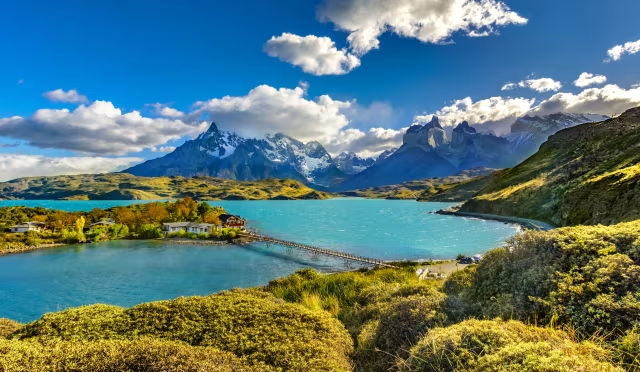
For the Quechua and Aymara peoples of the Andes, the great mountain peaks known as Apus are not simply geographical features. They are powerful spiritual beings, protectors of the communities that live in their shadow. Offerings are brought to them. Permission is sought before entering their high reaches. Ceremonies are conducted in relationship with them as conscious, living presences in the world.
For the Aboriginal peoples of Australia, the land itself is encoded with the Dreaming -- a vast cosmological framework in which the sacred journeys of ancestral beings are recorded in the physical features of the landscape. A rock formation, a waterway, a particular stretch of desert are not just things. They are stories, living transmissions from the time of creation, readable by those who have been taught to see. Walking through the land is, for many Aboriginal peoples, a form of prayer.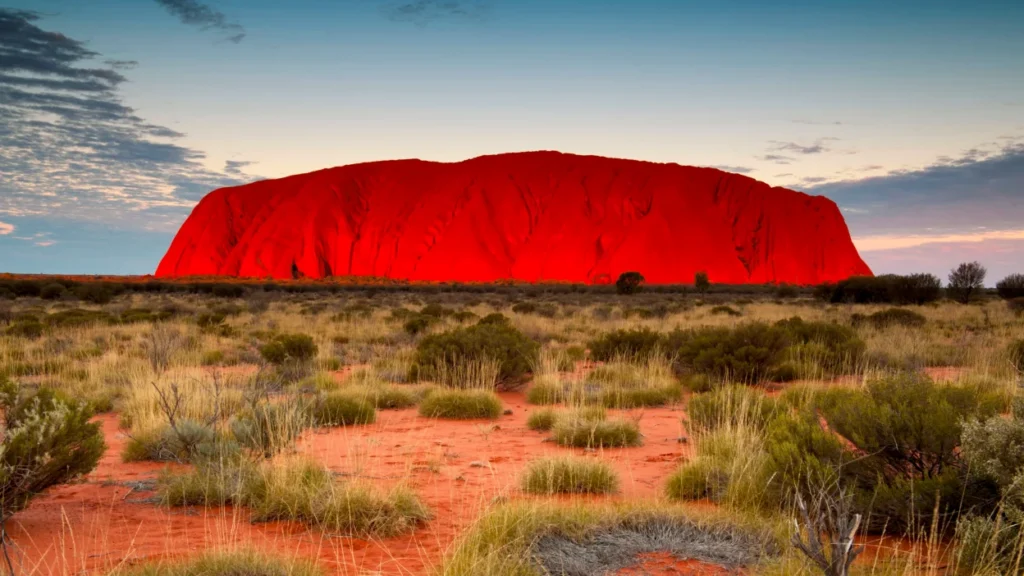
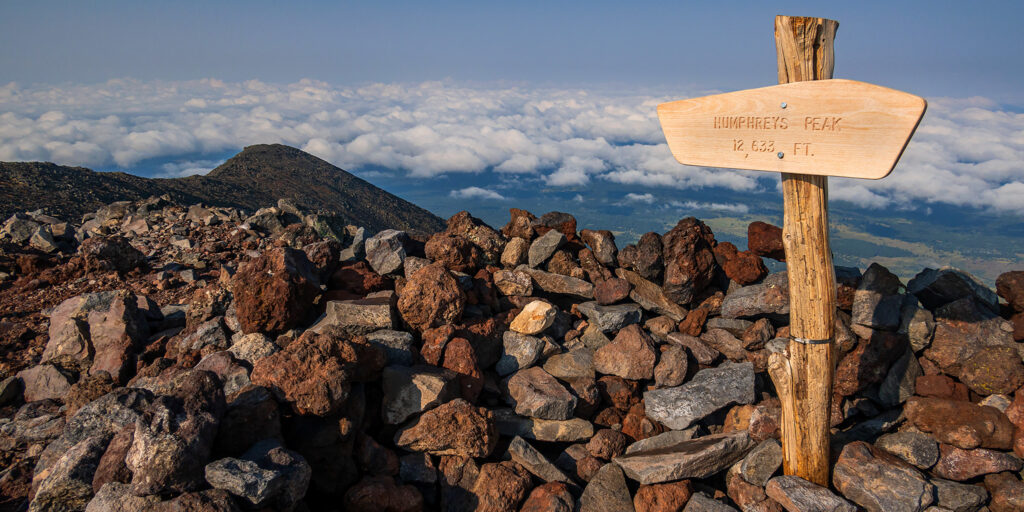
For the Navajo, the land defined by the four sacred mountains -- Blanca Peak to the east, Mount Taylor to the south, the San Francisco Peaks to the west, and Hesperus Mountain to the north -- is not simply territory. It is the body of the Holy People, a sacred geography that defines identity, ceremony, and the proper way to live.
The Forest as a House of Worship
Many indigenous traditions describe the experience of entering a forest, a desert, or a body of water with the same language that other traditions use to describe entering a temple. There is a threshold. There is a change in awareness. There is a felt sense of the presence of something vast and intelligent.
For the Achuar and Shuar peoples of the Amazon, the forest is understood as a community of subjects, not a collection of objects. Plants have intentions. Animals carry messages. The jaguar is not merely a predator but a being of spiritual power whose presence in ceremony or in dream is taken with great seriousness. The shaman's work is, in large part, the work of diplomacy -- negotiating relationships with the other-than-human persons who share the world.
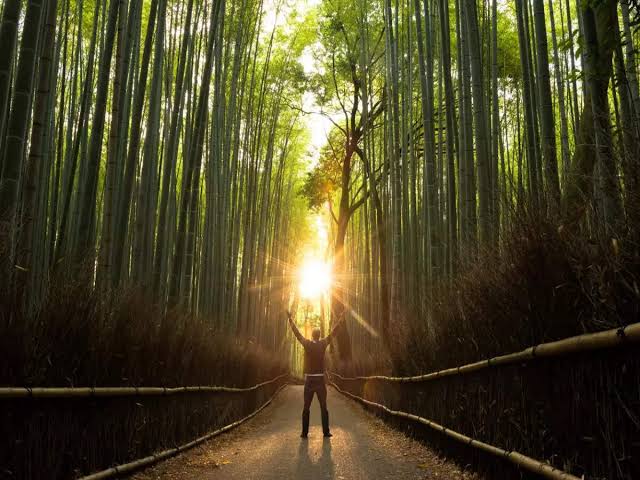
Among the Anishinaabe peoples of the Great Lakes region, this is expressed through the concept of manidoo -- a spiritual presence or life force understood to inhabit all things. Wind is manidoo. Fire is manidoo. A particularly old and twisted tree at the edge of a lake may carry a manidoo of unusual power, and to camp near it without acknowledgment would be a form of spiritual carelessness. Attention and respect are the currencies of relationship in a world understood to be alive in all its parts.
The Sacred Responsibility of Stewardship
If the earth is a temple, then human beings are not its owners. They are its caretakers. This distinction carries enormous practical consequence.
Indigenous agricultural traditions from the Pacific Northwest to sub-Saharan Africa to the rice terraces of the Philippine Cordillera have been guided by the understanding that the land is borrowed from future generations and held in trust from those who came before. To overwork it, to poison it, to exhaust it without renewal was not merely economically unwise. It was a spiritual violation -- a breach of covenant with the living world and with the ancestors who depended on the land being passed forward with integrity.
The Haudenosaunee Confederacy, known to many as the Iroquois, built this principle into their governance philosophy in the form of the Seventh Generation teaching. Decisions made by the council were to be evaluated not only by their immediate effects but by their consequences seven generations into the future. A commitment to those not yet born was understood as an obligation as real and present as any commitment to the living.
This is what it means to dwell in a temple. You do not treat a temple carelessly. You tend it. You return what you take. You ask before you act. You give thanks when you receive.
Ceremony as Participation in the Living World
In indigenous traditions, ceremony is rarely a withdrawal from the natural world into a separate sacred space. It is almost always a more intentional form of participation in the world as it already is.
The sweat lodge of the Plains peoples is built from willow branches and covered with hides or blankets. It is a small, dark enclosure that replicates the womb of the earth. The stones that hold the heat are addressed as grandfathers. The steam that rises when water is poured is the breath of the living world entering the lungs of those who sit in prayer. Every element of the ceremony is a relationship -- with the fire that heated the stones, with the water, with the earth beneath, with the sky above the smoke hole.
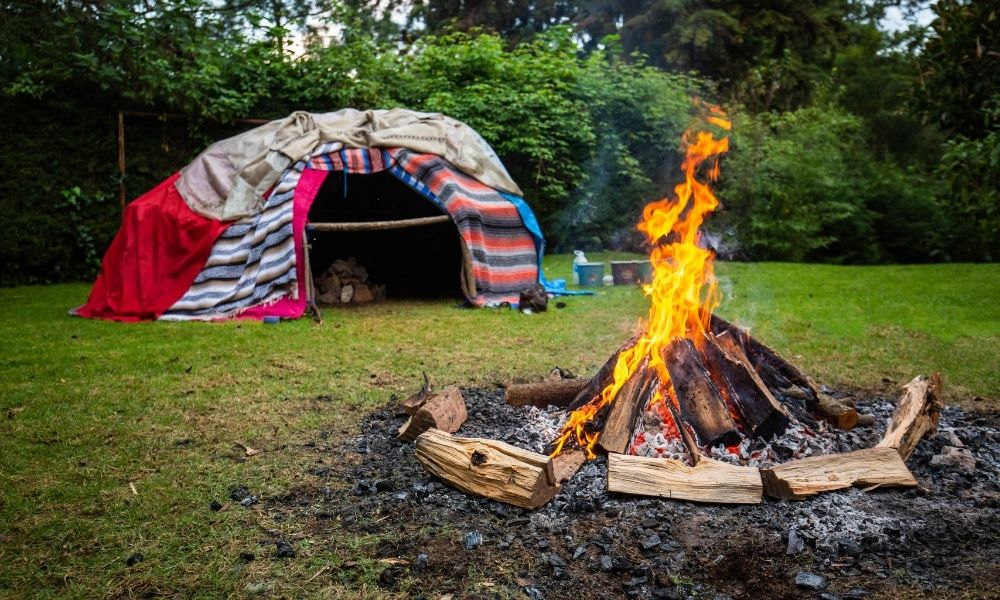
The Green Corn Ceremony of the indigenous people in the southeast of the United States, is a ceremony of renewal timed to the harvest of the first corn. It is simultaneously agricultural, communal, medical, and deeply spiritual. The new fire lit at its center is understood as a cosmological reset -- a restoration of right relationship between the human community and the living world that sustains it.
To participate in these ceremonies is not to perform a ritual. It is to remember, in the most embodied possible way, where you are and who you are in relationship to the living world around you.
What the Modern World Has Forgotten, and What It Is Beginning to Remember
The consequences of forgetting the earth as sacred are visible everywhere. An extractive relationship with the natural world does not only produce ecological crisis. It produces a particular kind of spiritual impoverishment -- a loneliness that comes from living in a world that has been drained of presence, meaning, and reciprocal relationship.
The hunger that drives so many people today to plant medicine ceremonies, to vision quests, to wilderness retreats, to indigenous teachings of all kinds is, at its root, a hunger to recover what was lost when the earth was reduced from a living relative to a collection of commodities. People want to feel the world breathe again. They want to stand somewhere that feels genuinely holy.
Indigenous peoples never lost that. At great cost, through generations of suppression and forced assimilation, they maintained the ceremonies, the languages, the stories, and the relationships that kept the earth's sacredness alive and knowable. That survival is itself a form of prayer -- an act of love for a living world that deserves to be remembered.
Walking in Beauty
The Navajo teaching of Hozho -- often translated as beauty, harmony, or balance -- is not an aesthetic preference. It is a description of right relationship with the living world. To walk in beauty is to move through the earth-temple with awareness, gratitude, and the consistent intention of leaving things more whole than you found them.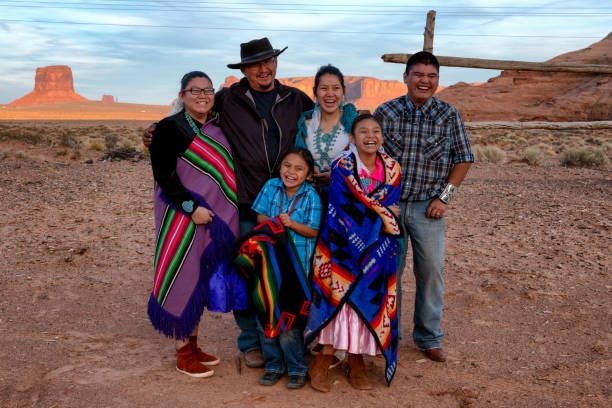
The invitation that James Warren "Flaming Eagle" Mooney and Native American Church extend to all who come seeking is precisely this: to recover a sense of the earth as sacred ground, to enter into relationship with the living world rather than merely passing through it, and to understand that the healing so many people seek is, at its deepest level, a healing of the relationship between human beings and the earth that holds them.
The temple was never lost. We simply forgot how to see it.